Understanding full-arch dental implant solutions
Losing all teeth in one or both jaws has a profound impact on daily life. Beyond aesthetics, it affects chewing, speech, facial support, and self-confidence. Modern implant dentistry has radically changed the options available to fully edentulous patients. Among the most advanced and widely used techniques today are All-on-4 and All-on-6 dental implants.
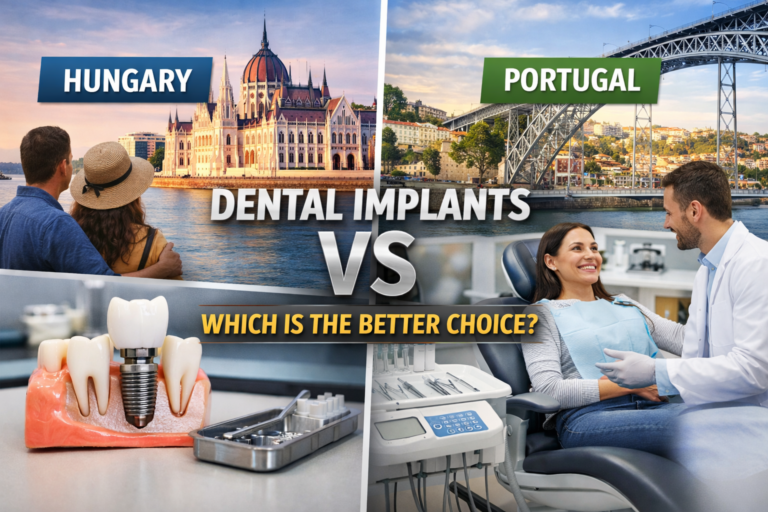
These protocols allow a full fixed prosthesis to be supported by a limited number of implants, offering a stable, long-lasting alternative to removable dentures. Portugal has become one of the leading European destinations for these treatments, attracting patients from abroad who seek high-quality care, advanced technology, and more accessible costs.
What is the All-on-4 concept?
The All-on-4 technique is designed to restore an entire dental arch using four strategically placed implants. Two implants are positioned vertically at the front of the jaw, while the two posterior implants are tilted to maximize bone contact and avoid anatomical structures such as the sinus cavities or the mandibular nerve.
This angulation is a key element of the technique. It allows many patients with bone loss to avoid bone grafting procedures, which would otherwise increase treatment time, cost, and complexity. In many cases, a fixed temporary prosthesis can be placed on the same day as surgery, enabling patients to leave the clinic with functional teeth.
What is All-on-6 and how does it differ?
All-on-6 follows the same biological and prosthetic principles but uses six implants instead of four. The additional implants provide greater distribution of chewing forces and enhanced long-term stability, particularly in patients with higher bone density or stronger biting forces.
The choice between All-on-4 and All-on-6 is never arbitrary. It depends on several factors including bone quality, jaw anatomy, occlusal forces, age, and long-term prosthetic goals. In Portugal, treatment planning is based on thorough clinical examinations and 3D imaging to determine the most suitable option for each patient.
Who is a candidate for All-on-4 or All-on-6?
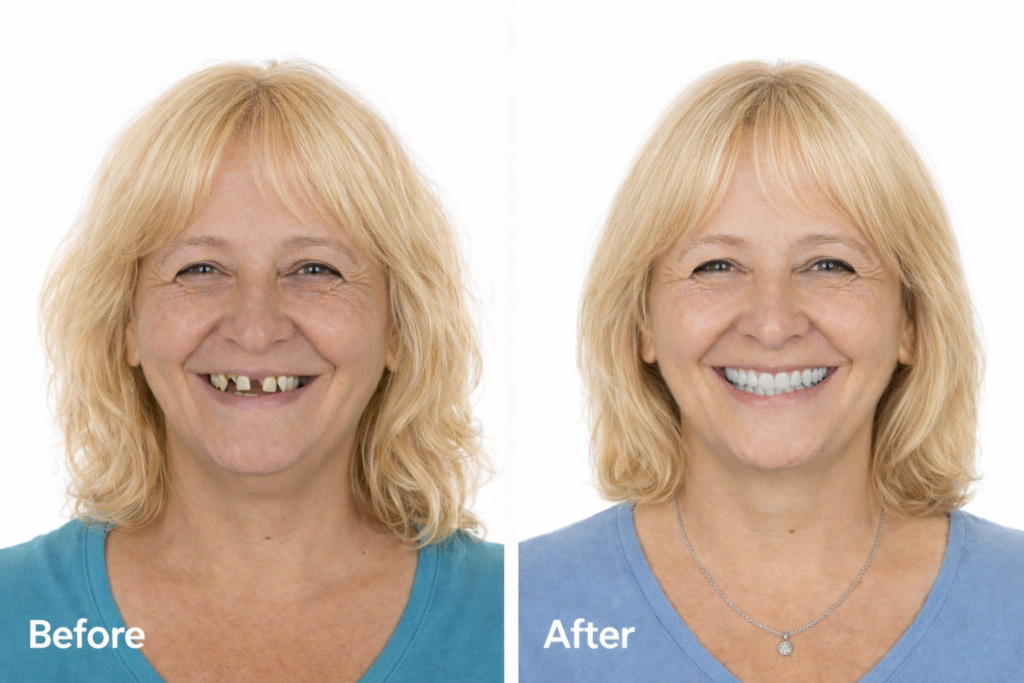
These treatments are intended for patients who are fully edentulous or who have remaining teeth that cannot be preserved. They are also suitable for individuals wearing unstable dentures or suffering from advanced periodontal disease.
However, candidacy depends on general health, bone condition, and lifestyle factors such as smoking. Chronic conditions like diabetes are not absolute contraindications, but they must be well controlled. A comprehensive evaluation is essential to ensure predictable outcomes.
Why Portugal is a leading destination for full-arch implants
Over the past decade, Portugal has built a strong reputation in implant dentistry. Dental clinics in cities such as Porto combine modern facilities, highly trained clinicians, and strict adherence to European medical standards.
Portuguese dentists often receive part of their training abroad and regularly participate in international continuing education programs. Clinics are equipped with digital planning tools, cone beam CT scanners, and in-house laboratories, allowing precise and efficient treatment workflows.
Another decisive factor is cost. While quality and safety remain comparable to other Western European countries, treatment fees in Portugal are generally lower. This balance between excellence and accessibility explains why so many international patients choose Portugal for All-on-4 or All-on-6 procedures.
The treatment process step by step
The journey typically begins with a remote pre-evaluation. Patients send panoramic X-rays or CBCT scans along with medical information. This allows clinicians to assess feasibility and outline a preliminary plan before travel.
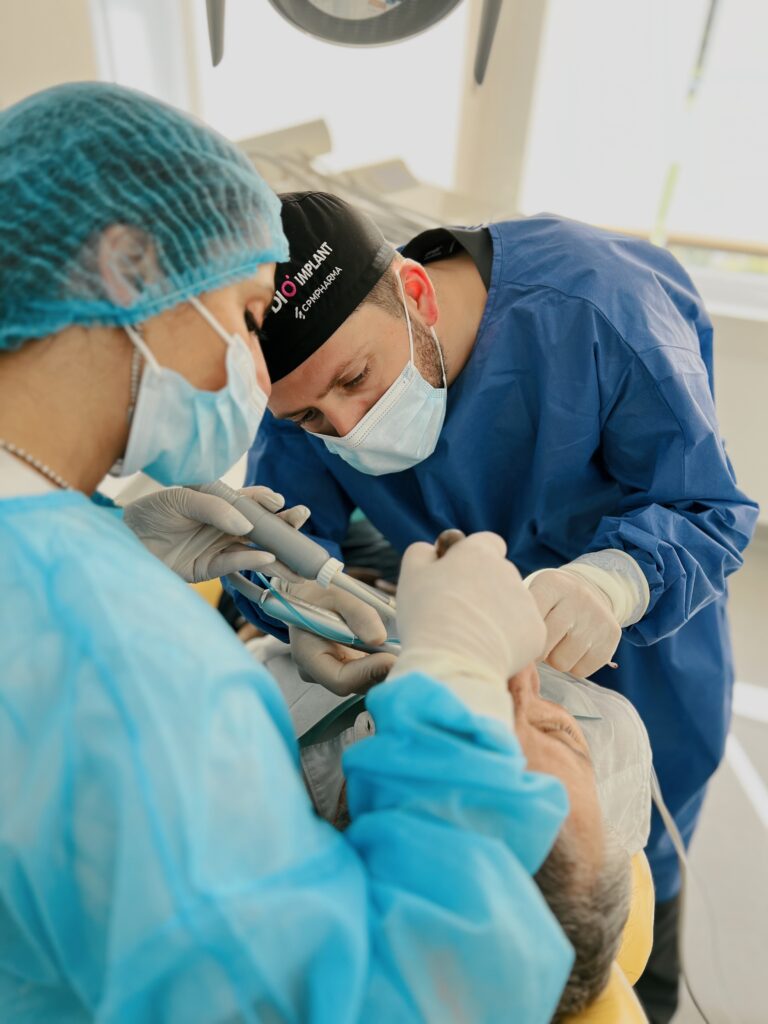
Upon arrival in Portugal, a full diagnostic appointment is performed. Digital scans, 3D imaging, and clinical examinations confirm the final treatment plan. Surgery is usually carried out under local anesthesia, sometimes combined with conscious sedation for greater comfort.
Implants are placed according to the chosen protocol, and a temporary fixed prosthesis is often attached within 24 to 48 hours. This provisional restoration allows patients to eat soft foods and smile confidently while the implants integrate with the bone.
Healing and final prosthesis
Osseointegration, the biological process through which implants fuse with the bone, typically takes several months. During this period, patients return home with clear post-operative instructions and remote follow-up.
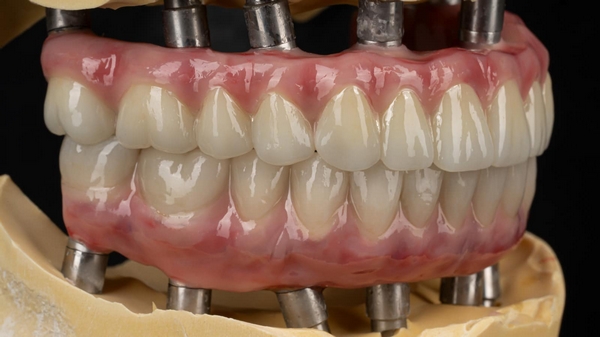
Once healing is complete, a final prosthesis is fabricated. This permanent restoration is designed for durability, aesthetics, and comfort. Materials such as zirconia or reinforced acrylic are commonly used, depending on clinical indications and patient preferences.
Materials used in All-on-4 and All-on-6 prostheses
The choice of materials plays a crucial role in the longevity and appearance of the final result. Zirconia bridges offer excellent strength, biocompatibility, and natural aesthetics. They are particularly suited for patients seeking a long-term solution with minimal maintenance.
Hybrid prostheses combining a titanium framework with acrylic or composite teeth provide a more cost-effective option while maintaining good function and appearance. Portuguese clinics carefully guide patients through these choices, explaining advantages, limitations, and maintenance requirements.
Safety standards and medical regulation in Portugal
Portugal operates under European Union healthcare regulations. Dental clinics must comply with strict hygiene protocols, equipment standards, and professional licensing requirements. This regulatory framework provides reassurance to international patients concerned about safety abroad.
Sterilization procedures, traceability of implant components, and informed consent processes are integral parts of clinical practice. Many clinics also offer multilingual staff, ensuring clear communication throughout the treatment process.
Cost considerations for international patients
One of the most frequent questions concerns price differences. While exact costs vary depending on materials, complexity, and individual needs, All-on-4 and All-on-6 treatments in Portugal are generally more affordable than in countries such as the UK, France, or the United States.
It is important to understand what is included in a treatment plan. A transparent quote should cover diagnostics, surgery, implants, temporary prosthesis, final restoration, and follow-up. Comparing treatments solely on price without considering these elements can be misleading.
Recovery, aftercare, and long-term maintenance
Recovery after surgery is usually straightforward. Mild swelling and discomfort may occur for a few days and are managed with prescribed medication. Patients are advised to follow a soft diet initially and maintain excellent oral hygiene.
Long-term success depends on regular check-ups and proper maintenance. Even though implants are not susceptible to decay, surrounding tissues must remain healthy. Professional cleanings and periodic assessments help ensure longevity.
A life-changing solution for many patients
For individuals who have struggled with removable dentures or failing teeth, All-on-4 and All-on-6 treatments can be transformative. The ability to eat comfortably, speak clearly, and smile with confidence has a significant impact on quality of life.
Choosing Portugal for this type of rehabilitation allows patients to access advanced dental care in a welcoming environment, often combining treatment with a pleasant stay in one of Europe’s most charming destinations.
Making an informed decision
Deciding to undergo full-arch implant treatment abroad requires careful consideration. Understanding the procedure, selecting a reputable clinic, and having realistic expectations are key elements of success.
Portugal continues to attract international patients not only because of cost advantages but also due to the professionalism of its dental sector and the quality of patient care. For many, it represents a balanced and reliable option for restoring a full smile with All-on-4 or All-on-6 implants.
SOURCES :
Wikipedia – Paulo Maló and the All-on-4® concept
Présentation du chirurgien portugais à l’origine du concept All-on-4®, avec le contexte scientifique et historique de cette approche implantaire.
PubMed Central (NCBI) – Clinical outcomes of All-on-4 and All-on-6
Article scientifique analysant les résultats cliniques et radiographiques des réhabilitations complètes sur quatre et six implants avec planification numérique.
PubMed Central (NCBI) – Four vs six implants in full-arch rehabilitation
Étude comparative évaluant la stabilité, la survie implantaire et la distribution des contraintes entre les protocoles All-on-4 et All-on-6.