Dental implants have become one of the most reliable solutions for full-arch rehabilitation. For international patients considering treatment abroad, dental tourism in Portugal has emerged as a leading option thanks to high clinical standards, modern technology, and competitive pricing.
Among full-mouth implant solutions, two techniques dominate: All-on-4 and All-on-6. While both allow a fixed full-arch prosthesis supported by implants, they differ in structure, stability, and long-term biomechanical behavior.
Understanding these differences is essential before planning your treatment in Portugal.
What Is the All-on-4 Concept?
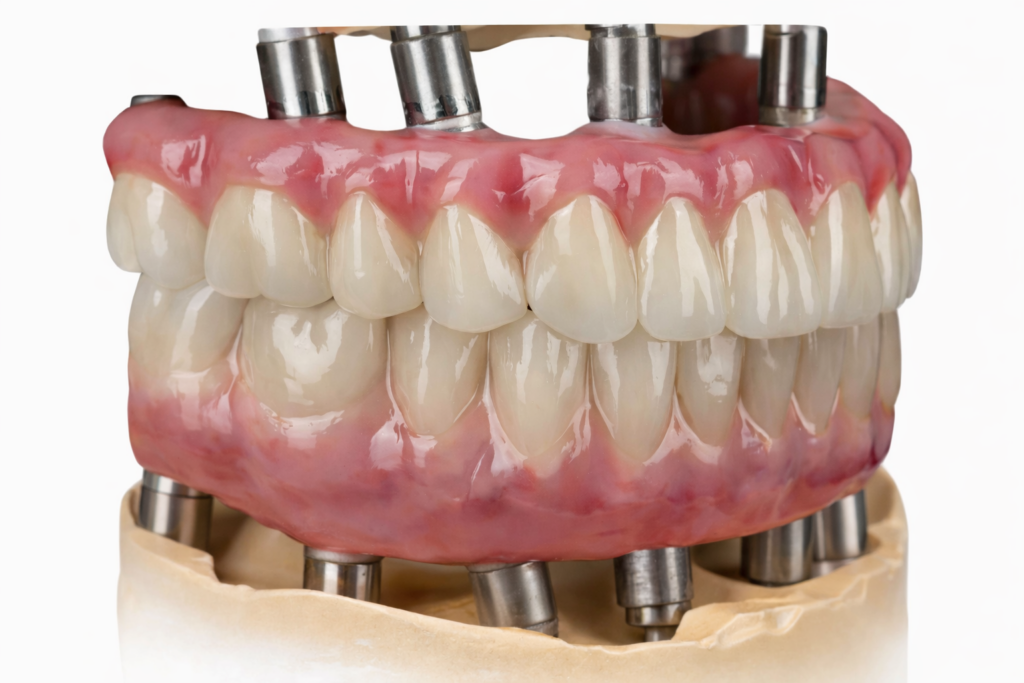
The All-on-4 protocol is designed to restore a full arch of teeth using four strategically placed implants.
Two implants are positioned vertically at the front of the jaw, while the two posterior implants are angled. This angulation maximizes bone contact and often avoids the need for bone grafting, even in patients with moderate bone loss.
Advantages of All-on-4
The main advantage is efficiency. Fewer implants mean:
• Reduced surgical time
• Lower overall cost
• Less invasive procedure
• Often no bone grafting
In many cases, patients receive a temporary fixed bridge within a few days, making it ideal for international patients traveling for treatment.
Who Is It Suitable For?
All-on-4 is often recommended for:
• Fully edentulous patients
• Patients with severely damaged teeth
• Individuals with moderate posterior bone loss
• Patients seeking a faster and more budget-conscious solution
For those considering dental tourism in Portugal, All-on-4 offers a well-structured treatment timeline that fits international travel planning.
What Is the All-on-6 Concept?
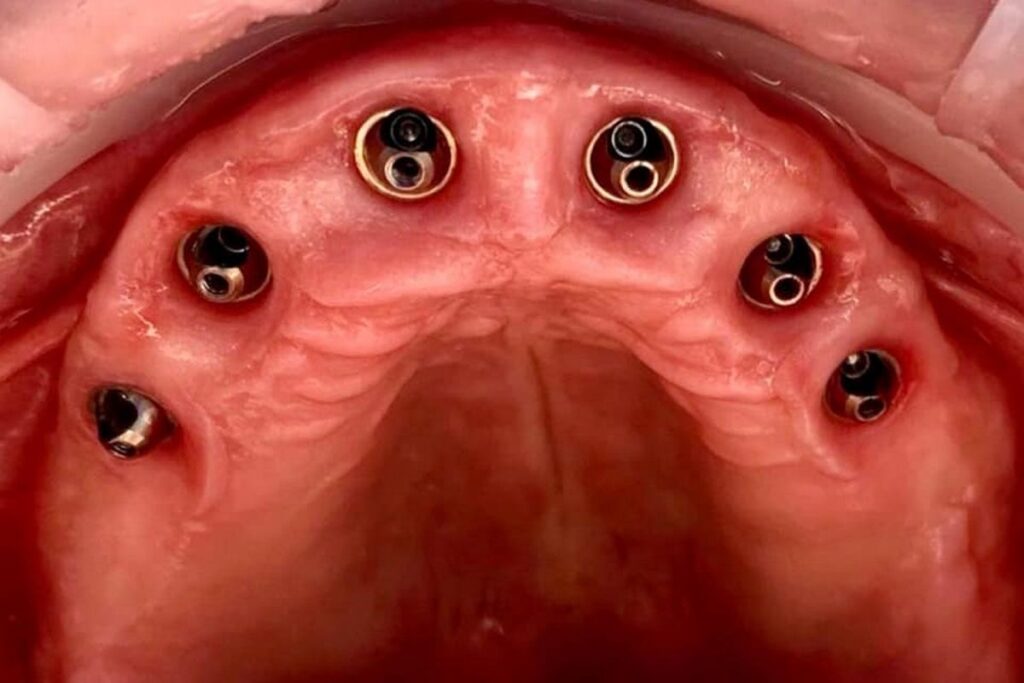
The All-on-6 protocol follows the same principle as All-on-4 but uses six implants instead of four to support the full-arch prosthesis.
By increasing the number of implants, occlusal forces are distributed more evenly across the jaw.
Advantages of All-on-6
The key benefit is enhanced mechanical stability. With six implants:
• Force distribution is improved
• Long-term stress on each implant is reduced
• Stability may be superior in patients with strong bite forces
This solution is often chosen by younger patients or individuals seeking maximum durability.
Who Is It Suitable For?
All-on-6 may be recommended for:
• Patients with adequate bone volume
• Patients wanting maximum long-term support
• Individuals with higher chewing forces
• Cases where additional structural reinforcement is beneficial
Stability and Biomechanics: 4 vs 6 Implants
From a biomechanical perspective, increasing implant number generally improves load distribution.
However, modern All-on-4 protocols are designed to compensate for fewer implants through angulation and strategic positioning.
Clinical studies show high long-term success rates for both approaches when properly planned and executed.
Ultimately, implant number alone does not determine success. Surgical precision, bone quality, prosthetic design, and post-operative care are critical factors.
Treatment Timeline in Portugal
One of the reasons patients choose Portugal for implant treatment is the efficiency of clinical organization.
Phase 1: Surgical Placement
• Clinical consultation and 3D scan
• Implant placement
• Temporary fixed bridge
This phase typically lasts 4 to 7 days.
Healing Period
Osseointegration usually takes between 3 and 6 months.
Phase 2: Final Prosthesis
Patients return for the placement of the definitive zirconia or ceramic bridge, usually requiring 5 to 7 days.
The timeline is similar for both All-on-4 and All-on-6.
Durability and Long-Term Outcomes
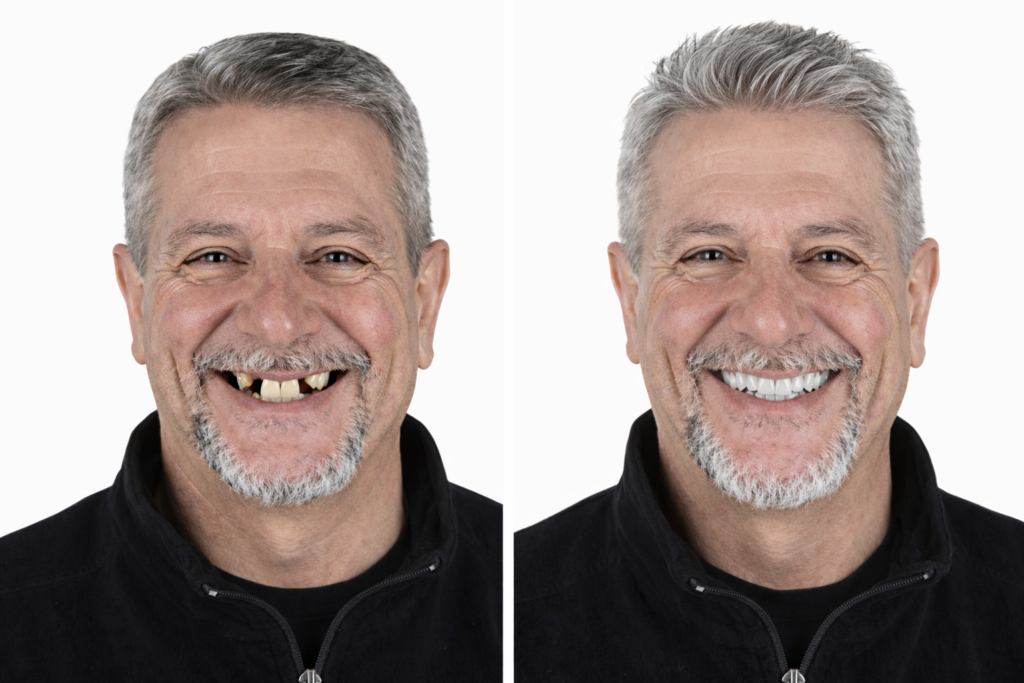
Both protocols demonstrate implant survival rates exceeding 95% at 10 years in well-managed cases.
All-on-6 may offer theoretical mechanical advantages due to additional support, but real-world outcomes depend primarily on:
• Bone quality
• Surgical technique
• Prosthetic materials
• Patient hygiene and maintenance
In Portugal, advanced digital planning and guided implant surgery contribute significantly to long-term success.
Cost Comparison in Portugal
All-on-4 is generally more affordable because it involves fewer implants and slightly shorter surgical time.
All-on-6 carries a higher initial cost due to two additional implants and increased surgical complexity.
However, compared to prices in the UK, Ireland, Canada, or the United States, treatment in Portugal often represents substantial savings while maintaining European clinical standards.
This balance between cost and quality explains the rapid growth of dental tourism in Portugal.
Porto: A Strategic Destination for Full-Arch Implants
The city of Porto combines advanced medical infrastructure with easy international accessibility.
Modern implant clinics in Porto utilize:
• 3D CBCT imaging
• Digital smile design
• Guided implant surgery
• High-quality zirconia prosthetics
For international patients, Porto offers a reassuring combination of medical excellence and travel convenience.
How to Choose Between All-on-4 and All-on-6?
The decision should never be based solely on price.
Key factors include:
• Bone density and volume
• Bite force
• Long-term expectations
• Budget considerations
• Clinical recommendation after 3D evaluation
Both All-on-4 and All-on-6 are reliable, evidence-based solutions.
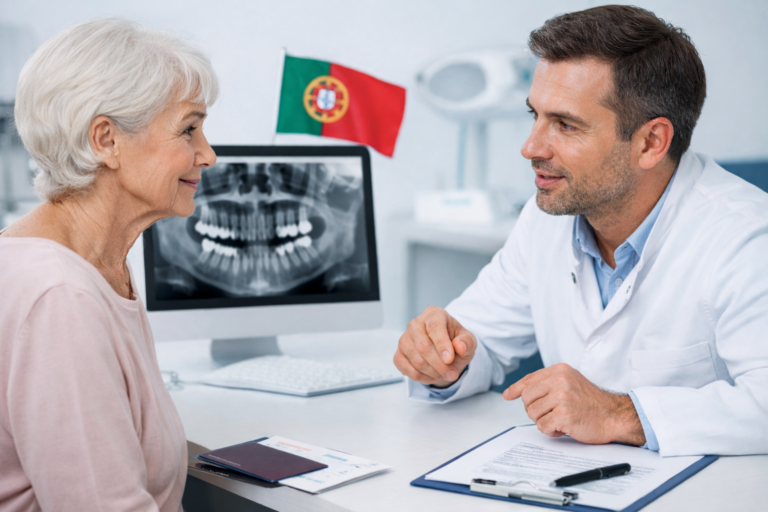
The most appropriate choice is determined after a full diagnostic assessment, including a panoramic X-ray or CBCT scan reviewed by an experienced implant specialist.
Final Considerations for International Patients
If you are considering full-arch dental implants abroad, Portugal offers a safe, modern, and cost-effective environment.
Both All-on-4 and All-on-6 provide fixed, aesthetic, and functional rehabilitation.
The best solution is not the one with more implants, but the one that matches your anatomy, expectations, and long-term oral health goals.
SOURCES :
European Association for Osseointegration (EAO) – Clinical Guidelines on Implant Dentistry
European clinical recommendations on implant planning, immediate loading protocols, and full-arch rehabilitation standards.
(Consulté le 10/02/2026)
International Team for Implantology (ITI) – Treatment Guide Series (Full-Arch Rehabilitation)
Comprehensive clinical guides detailing All-on-4 and All-on-6 protocols, indications, surgical concepts, and biomechanical principles.
(Consulté le 10/02/2026)
Cochrane Library – Interventions for Replacing Missing Teeth: Implant-Supported Prostheses
Independent systematic review evaluating implant survival rates and outcomes for full-arch implant-supported restorations.
(Consulté le 10/02/2026)
National Institute for Health and Care Excellence (NICE) – Oral Health Guidance
UK evidence-based standards and quality frameworks relevant to dental implant care and patient safety.
(Consulté le 10/02/2026)